Icon
Can Chocolate Literally Make You Happy? What the Science Says

Can Chocolate Literally Make You Happy? What the Science Says

Table of Contents

Key Takeaways
  • Chocolate contains multiple compounds that work together to boost mood by enhancing neurotransmitters like dopamine and serotonin, providing natural mood-lifting effects.
  • Dark chocolate, with its higher cocoa content, generally offers more mood and cognitive benefits than milk chocolate due to its richer concentration of beneficial compounds, though both types provide pleasurable sensory experiences that contribute to happiness.
  • Combining chocolate with cannabis can amplify mood and relaxation benefits due to overlapping biochemical pathways and improved cannabinoid absorption facilitated by chocolate’s fats, creating synergistic effects that enhance overall pleasure and emotional well-being.
The holidays are fast approaching, which usually translates into a measurable increase in daily chocolate consumption. As you nibble on your Advent chocolate, with a smile slowly creeping up at the corners of your mouth, you won't be the only one to wonder how something so simple can make you so darn happy.

Chocolate's indulgent flavor and creamy texture are two obvious reasons it is so closely associated with pleasure. But could there be a lot more going on here? 

At the biochemical level, there is a fascinating relationship between cacao compounds, feel-good hormones, and our reward pathways, that may just culminate in an all-natural mood boost.

And if there's anything we love at Hometown Hero, it's natural mood-lifters. Here's the run-down of how chocolate triggers the release of feel-good molecules, which chocolate is the most effective for mood, and how cannabis shockingly fits right into the equation.

What is Chocolate, Exactly?

woman enjoying a chocolate bar

Ah, chocolate. We know what it tastes like, smells like, and even looks like, but what is it?

Chocolate consumption dates back 4,000 years, with origins in ancient Mesoamerica. Cocoa (the main ingredient in chocolate) is made from the fruit of the cacao tree, from which the beans are harvested, fermented, roasted, and further processed into a paste consisting of cacao solids and cacao butter.

Of course, at this stage, the product is pretty bitter and unpalatable. Eventually, humans found a way to separate the solids and butter to make cocoa powder, to which manufacturers add sugar, sometimes milk, and other fun ingredients (THC-infused chocolate, anyone?), then pour and cool the mixture in a mold. This gives us the sweet and creamy treat we all know and love.

The Science of Cocoa Compounds

Given chocolate's subtle yet noticeable effects on our mood, it's no wonder that so much research has sought to understand its unique makeup of natural compounds. Let's take a closer look at how chocolate works its magic, according to science.

Flavonoids

For one, cocoa (primarily cacao solids) is rich in flavonoids, specifically epicatechin and catechin. These phytochemicals are antioxidants, neuroprotectants, and anti-inflammatories that are also associated with a lower risk of heart disease. 

What does this have to do with chocolate's feel-good effects? All of these beneficial properties mean that cacao flavols may improve mood by increasing blood flow to the brain and reducing stress-induced inflammation. 

Dark chocolate, in particular, might even contain sufficient levels of flavonols to support improved cognitive function and memory, according to some early findings

Serotonin

Serotonin is best known for its role in mood, but it also influences memory, stress response, and digestion.

Cocoa contains not only trace amounts of serotonin, but also a compound called tryptophan, an amino acid that our bodies actually use to create more serotonin

It should be noted that the amount of tryptophan present in chocolate is modest, and serotonin itself cannot cross the blood-brain barrier. But chocolate can still indirectly support serotonin production.

For example, carbohydrates in chocolate bars may help the brain absorb tryptophan more efficiently by reducing competition from other amino acids.

Dopamine

Next up is dopamine, the brain’s reward molecule, tied to pleasure, motivation, and reinforcement. Chocolate is said to increase dopamine levels because it contains a compound called tyrosine, which is a precursor of dopamine

Although the amount of tyrosine in cocoa is not as robust as in other familiar dietary sources, it works alongside other cacao compounds for an amplified effect.

And when combined with the sugar and fats that come wrapped up in a chocolate bar, tyrosine engages reward pathways, increasing dopamine and opioid signaling

This dopaminergic response is real, and it's actually common to many highly palatable foods.

Phenylethylamine

Also known as the "love molecule," phenylethylamine (PEA) is a natural monoamine alkaloid linked to feelings of excitement, infatuation, and attraction. Our brains naturally have a reserve of PEA, but with more circulating in the nervous system, greater dopamine release and serotonin activity may be stimulated.

Chocolate (among other fermented foods) contains trace amounts of phenylethylamine, which may explain its reputation as an aphrodisiac

There's still some debate over whether chocolate's lovey-dovey qualities survive digestion. Since it is rapidly metabolized, any arousing effect may come from chocolate’s sensory and emotional appeal (being so closely associated with Valentine's shenanigans) rather than direct neurochemical action. 

Still, dietary sources of this molecule, of which chocolate is most popular, provide the building blocks for our brains to produce their own PEA.

Anandamide

Then there is anandamide, our body's own in-house bliss molecule. It's responsible for pleasure and euphoria, but it also influences brain reward circuitry via its interactions with the endocannabinoid system

Anandamide directly binds to the CB1 receptor, which you might recall is what THC (the main psychoactive compound in cannabis) binds to.

Chocolate- especially raw cacao- contains trace amounts of anandamide. While small, this is thought to stimulate the endocannabinoid system for mood-boosting benefits. 

THC? Endocannabinoid system? Does this mean chocolate can make you "high?"

While chocolate doesn't induce a powerful euphoria as THC does, chocolate does inhibit the breakdown of endogenous anandamide, preserving higher natural levels of this neurotransmitter.

Theobromine & Caffeine

Finally, an honorable mention goes out to both theobromine and caffeine. Cocoa also contains trace amounts of both, which together are thought to deliver mild stimulation, improved focus, and alertness. 

Caffeine, the same psychostimulant in coffee that blocks adenosine, the sleepy hormone, produces that familiar feeling of alertness. The highest sources of caffeine are cocoa powder or baking chocolate, but a standard 50-gram serving of a milk or dark chocolate bar can contain anywhere from 14-200mg.

Caffeine's effects are centered on the central nervous system, while theobromine provides a slower, gentler, more cardiovascular‑focused stimulation. 

Together, these energy-boosting compounds explain why a bit of chocolate can get you through a slow afternoon at work, or why eating too much chocolate too late may keep you up at night.

The Sensory Experience: Taste, Texture, and Smell

woman savors chocolate

Advanced biology lessons aside for a moment, chocolate provides more pleasure than just what's happening at the molecular level. Most of the biological effects are subtle and, truthfully, depend on what type and how much chocolate you consume. One thing is for sure- chocolate's decadently creamy texture is a delight in and of itself.

Need proof? Try a little experiment. Break off a piece of chocolate and place it in your mouth. Allow it to warm up gradually to body temperature, then slowly melt away. This simple bite will inevitably transform into a pure moment of bliss. And that feeling sets in long before cacao compounds get metabolized through the digestive system. It's the special combination of taste and mouthfeel that brings a smile to your face.

And of course, a special shout-out to the sugar rush that follows any chocolatey snack. Because what is a sugar rush but a big release of dopamine from our brain’s reward system? Sugar, in any format, tells our brain that this experience feels good — and it usually tells us to go back for more.

Emotional Support: Chocolate as Tradition and Ritual 

Scientifically, as we've seen, chocolate's molecular makeup, taste, and texture are all linked to our reward and pleasure circuitry. But these are not the only reasons why chocolate is such a profoundly soothing way to find comfort. Another is the many intimate associations we have with it.

Just think about all the nostalgic moments in which chocolate plays a central role — from the chocolates hidden at the bottom of your Christmas stocking to a slice of chocolatey birthday cake. And let's not forget those heart-shaped boxes of chocolate-covered strawberries sent with love from your significant other. 

Today, chocolate is also carving out a place in self-care rituals, like a decadent piece of dark chocolate paired with a candle-lit journaling session or a full-on cacao ceremony. 

Chocolate's newfound role in wellness stems not only from its blissed-out biochemical effects, but also from its traditional use. Long before chocolate bars came on the scene, the Maya and Aztecs revered cacao in sacred rituals, preparing cups of thick, rich cacao during festivals, rites of passage, offerings, and other important ceremonies. For Mesoamerican cultures, cacao was a food fit for the gods.

 When used mindfully, chocolate can help achieve greater pleasure. Especially as a piece slowly melts away on your tongue, chocolate gives us space to lean into in a moment of pure bliss.  

Dark vs. Milk: Which Boosts Happiness More?

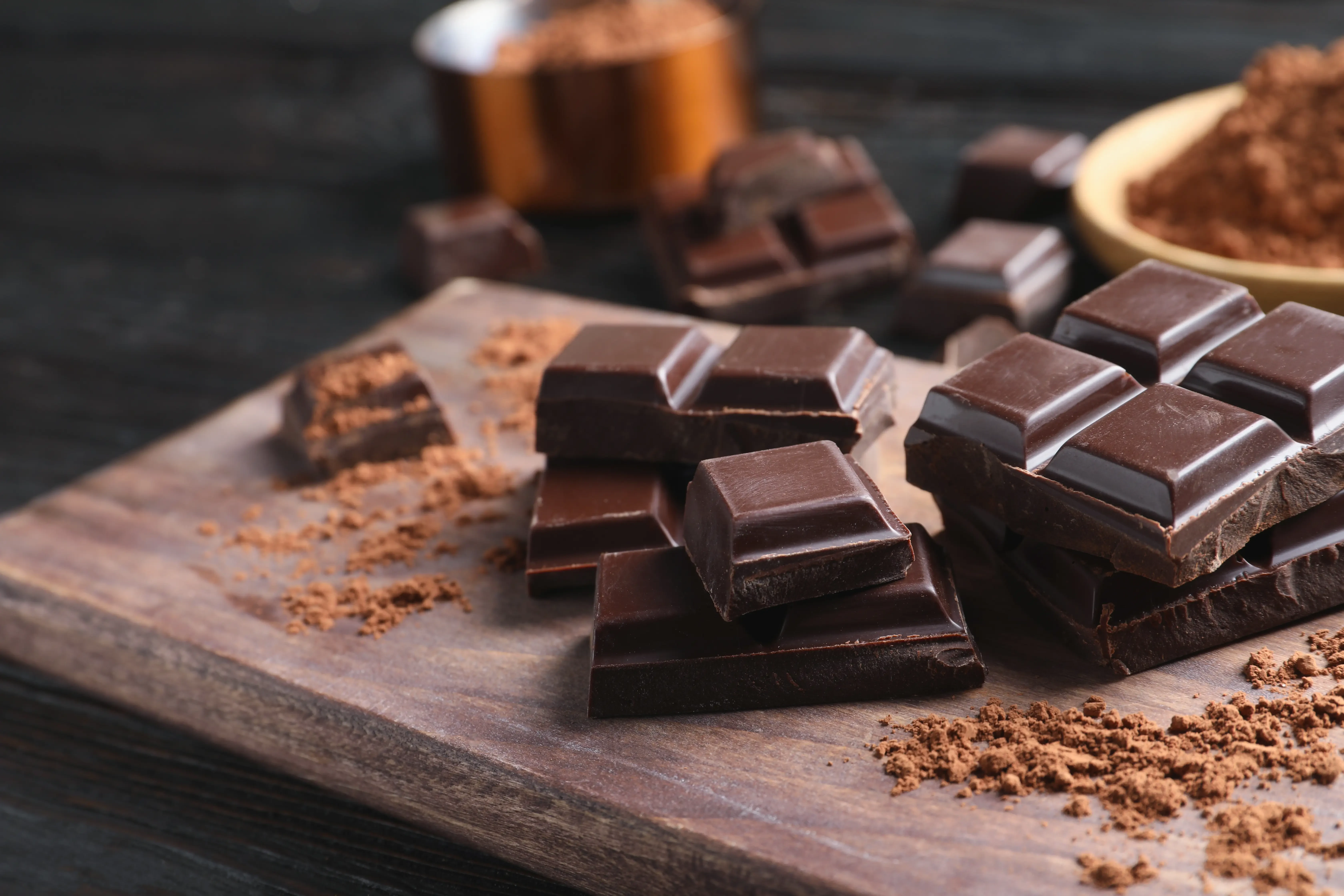
chocolate bars on a dark table

Lovers of chocolate usually have a strong opinion about which type they prefer, whether it's the luxuriously melty milk variety or a heavenly, rich dark chocolate. 

Scientifically speaking, dark chocolate is likely to boost happiness more than its milk counterpart. This is because dark chocolate naturally contains higher cocoa solids, which means more tryptophan, tyrosine, phenylethylamine, and other compounds that boost the levels of our feel-good chemicals.

Countless studies tout the remarkable benefits of dark chocolate. In one, participants who enjoyed 85% dark chocolate, compared with a 70% dark chocolate "intervention," experienced a measurable improvement in mood.

Other studies have found benefits for alleviating fatigue, improving cognitive performance, and boosting emotional functioning, which can all be directly or indirectly tied back to better moodWith more cacao solids than milk, dark chocolate also has a higher level of flavonoids for stronger brain and heart benefits. 

But that doesn't mean milk chocolate has no mood-boosting benefits. Although milk chocolate has less cocoa and more sugar than dark chocolate, these ingredients also make it profoundly delicious.

Its sweet, creamy flavor is strongly rewarding (a.k.a. pleasurable) in the short term. New experimental research shows that increasing sugar and decreasing cocoa content may subtly enhance its euphoric effects

Cannabis and Chocolate: The Perfect Pair

different hometown hero thc chocolate boxes

Considering the many overlapping effects that cannabis and chocolate share, when used together, they make for an impressive and pleasurable duo.

Obviously, the rich, creamy flavor of chocolate pairs beautifully with cannabis, but this pairing offers greater synergies for mood, relaxation, and more. Whether dark or milk, chocolate's subtle mood-lighting benefits complement the uplifting and euphoric effects of cannabis.

By this point, you've likely heard about, or at least experienced, the entourage effect. This theory explores how cannabinoids, terpenes, and flavonoids work together to create compounding effects that are more beneficial than THC or CBD alone

So, what would happen if we combined cannabis with chocolate?

Because these two ingredients operate through many of the same channels and regulate many of the same systems, they also exhibit synergies that further amplify the benefits of the cannabis entourage effect. Cannabis-infused chocolate engages multiple overlapping mechanisms in the body to support mood, memory, stress response, and the reward system.

As an added bonus from combining cannabis with chocolate, the natural fats in chocolate (especially cocoa butter) can help your body absorb cannabinoids more effectively. In one study examining the bioavailability of THC and CBD formulas, absorption rates increased 2.5 to 3-fold when coadministered with lipids (fats). 

That's because cannabinoids like THC are highly lipophilic, meaning they bind well to fats. When consumed with rich, fatty chocolate, you may experience stronger, longer-lasting effects thanks to improved absorption.

The Biochemistry of Bliss:  Chocolate Made for Happy Moments

If the synergies between chocolate and cannabis sound too good to be true, it may be time to experience the bliss for yourself.

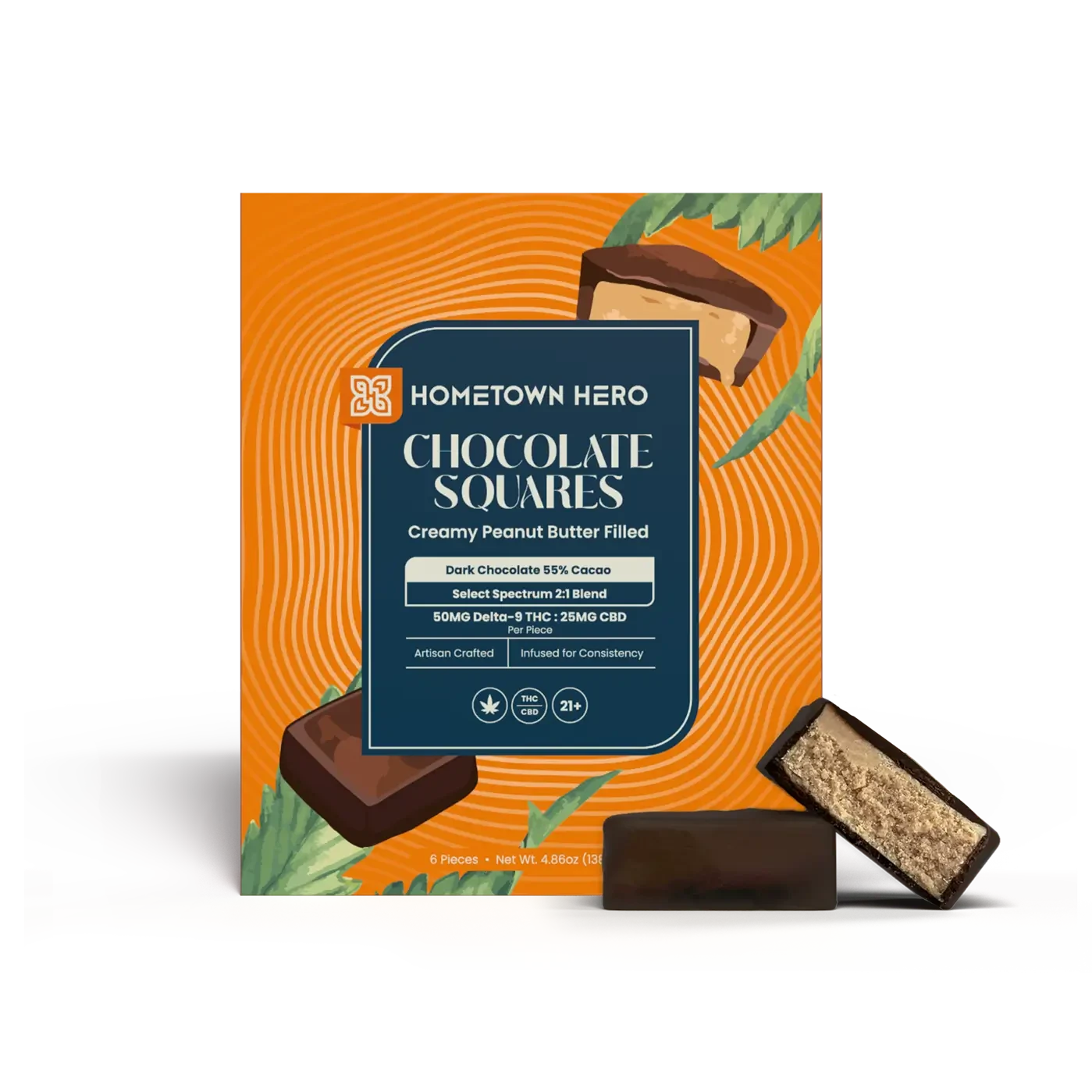
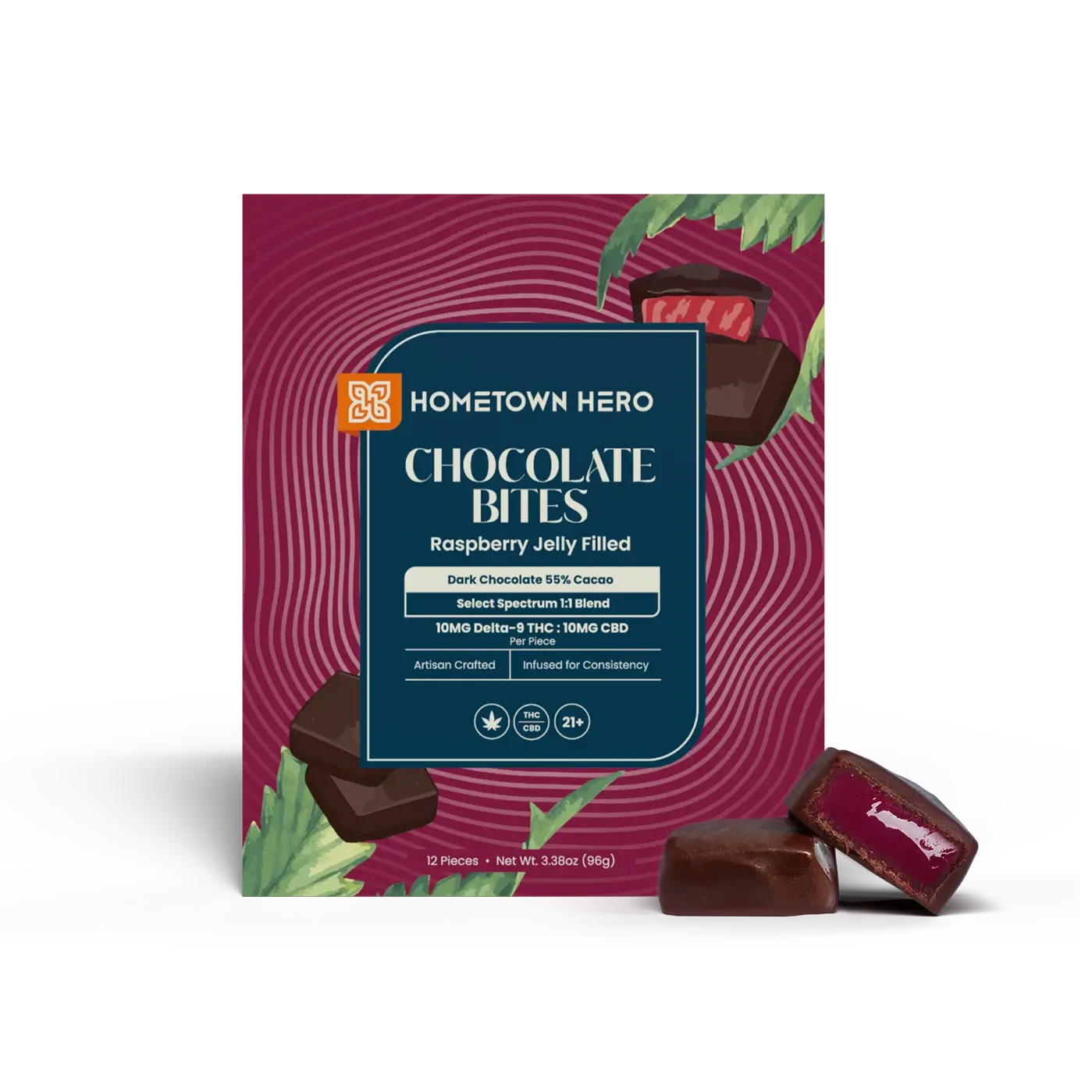
From fudgey, rich Delta-9 Brownies to sweet Raspberry Jelly Chocolate Bites to creamy Dark Chocolate Peanut Butter Squares, we've got the chocolately, synergistic treats for any occasion.

dark chocolate peanut butter squares
5 stars
122
50mg - Dark Chocolate Peanut Butter Squares
50mg D9/Pc 25mg CBD/Pc
EXPLORE

Raspberry Jelly Filled Dark Chocolate
5 stars
82
10mg Raspberry Jelly Dark Chocolate Bites
10mg D9/Pc 10mg CBD/Pc
EXPLORE

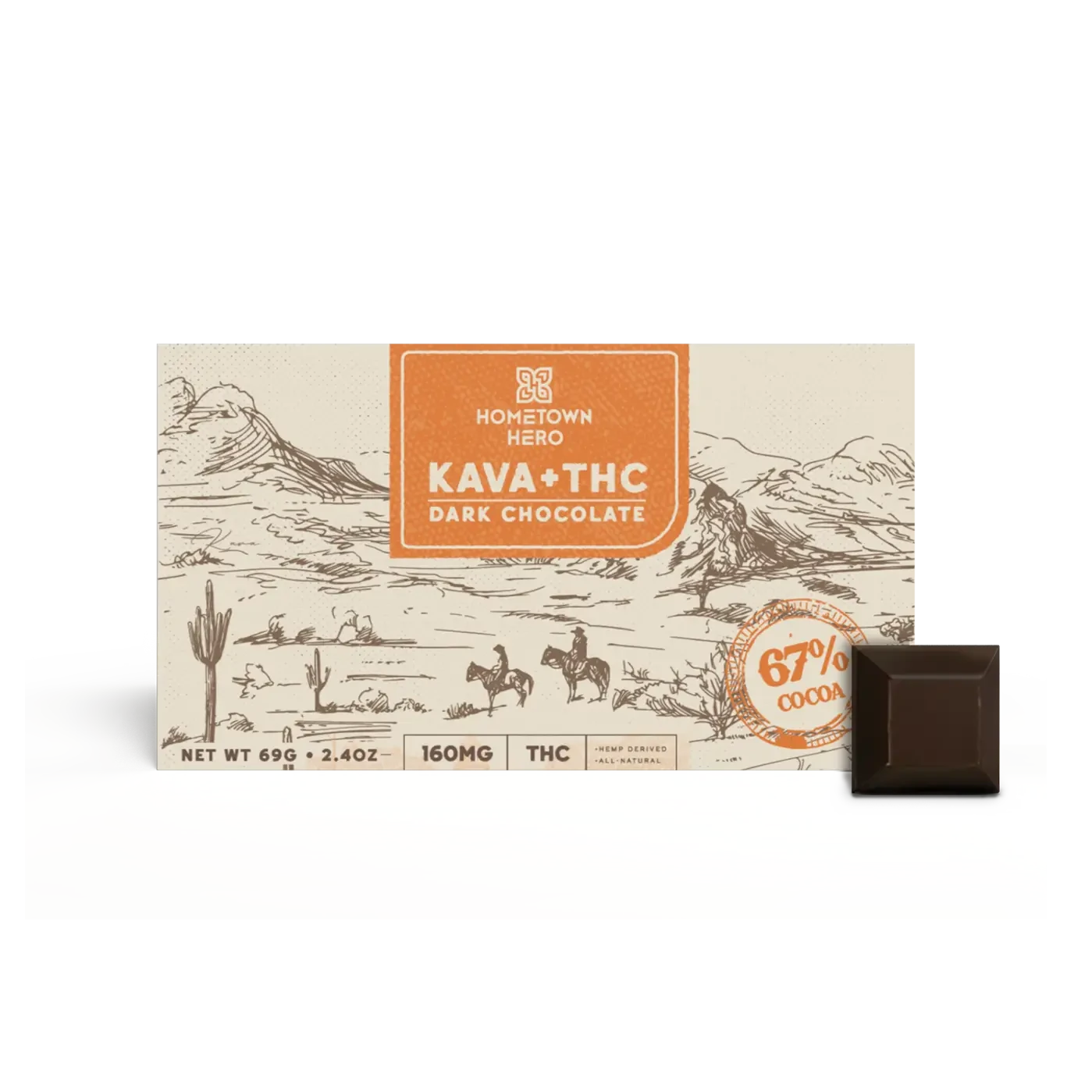
Kava and Delta-9 THC Chocolate Bar
5 stars
152
Kava + THC - Dark Chocolate Bar
160mg D9/Pc
EXPLORE

Our decadent edibles are handcrafted with high-end ingredients, delta-9 THC from Texas-grown hemp, and premium botanical extracts. Lab-tested for potency and purity, with precise, consistent serving sizes, every bite of a Hometown Hero edible delivers elevating, predictable effects.

Just remember, a little goes a long way. Unlike any non-infused chocolates you may gobble down, you'll want to start with a single serving size — just one piece — to see how the effects feel before going back for more.

Does Chocolate Make You Happy? Science Proves It

Does cannabis affect endorphins? What about cannabis and serotonin? It's not just a wellness myth; science actually proves it.

Between the dopamine, serotonin, phenylethylamine, and all those other blissful compounds that trigger endorphins, there's a lot happening in every bite of chocolate. Add in a serving of THC, and you've got a pair that works on multiple levels to elevate your mood, ease tension, and put a smile on your face. 

So, this holiday season, instead of a twinge of guilt when you go back for another piece, allow yourself more chocolatey pleasure and more moments of pure joy.

Until Next Time, Mind Your Mind.

FDA Disclaimer:
 The statements made regarding these products have not been evaluated by the Food and Drug Administration. The efficacy of these products has not been confirmed by FDA-approved research. These products are not intended to diagnose, treat, cure, or prevent any disease. All information presented here is not meant as a substitute for or alternative to information from health care practitioners. Please consult your healthcare professional about potential interactions or other possible complications before using any product. The Federal Food, Drug, and Cosmetic Act requires this notice.
Follow us
Related products
50mg - Dark Chocolate Peanut Butter Squares (Buy 4, Get 1 Free)
50mg D9/Pc 25mg CBD/Pc
50mg - Dark Chocolate Peanut Butter Squares
50mg D9/Pc 25mg CBD/Pc
10mg - Dark Chocolate Peanut Butter Squares
10mg D9/Pc 5mg CBD/Pc
Explore collection
Related Posts
Can Exercising Enhance Your High? What the Science Does (and Doesn’t Say)
December 16, 2025
Can Exercising Enhance Your High? What the Science Does (and Doesn’t Say)
A Complete Guide to the Different Types of Dabs
December 16, 2025
A Complete Guide to the Different Types of Dabs
Explore all posts