Amanita muscaria has been historically associated with several indigenous and traditional religious practices with a primary intersection around the concept of “soma” - which was essentially a “drink of the gods.”
There is speculation that Amanita muscaria played a role in Norse mythology in relation to the god Odin where some theories suggest that the mythical drink "Soma" mentioned in ancient Norse texts could be fly agaric. Indigenous cultures of Siberia have also used Amanita muscaria in their shamanic rituals as it was believed to facilitate communication with spirits. Even one of the oldest texts in Hinduism, The Rigveda, references Soma, with some scholars believing it to be the same mushroom.
In the same vein as the
Stoned Ape Hypothesis where our consciousness was derived from psilocybin, it’s been argued that Amanita may be the source of another historically significant story - Saint Nicholas.
The connection between Christmas mythology, Santa Claus, and Amanita muscaria mushrooms has been a topic of speculation and debate among scholars and enthusiasts for quite some time. And honestly…it’s a stronger connection than you might guess.
Researchers propose that certain elements of the modern-day
Santa Claus Mythos, such as the iconic red and white suit similar to the red and white caps, may have origins in Siberian shamanic practices involving Amanita muscaria.
To be even more literal, shamans in Asia wore distinctive attire for collecting fly agaric mushrooms. They wore red coats and pants embellished with white fur on the collar and cuffs, complemented by black boots. Equipped with a special sack, the shaman would gather the mushrooms and return to the village.
The shaman would then enter the communal yurt, a portable tent dwelling, through the smoke hole - the smoke hole being essentially a chimney for the yurt. During the ceremonial ritual, the shaman and participants would consume and share the sacred mushrooms.
Fly agaric mushrooms were even thought to have brought about mild hallucinations that involved the sensation of flying. Reindeer conveniently also absolutely love to eat amanita. Is this all sounding mildly familiar yet? Just imagine Shaman Santa Clause delivering a package of shrooms instead of your Sega Dreamcast.
How is Amanita Consumed?
Before we explore this next topic, it’s important for you to know that we are not suggesting you should try eating amanita mushrooms from your own preparation. This can be dangerous and we highly recommend against that.
Similar to psilocybin mushrooms, amanita can potentially be dried and eaten or infused in a tea. The potency of the mushrooms and the corresponding tea are impacted by a variety of unpredictable factors such as age, size, and growing habitat.
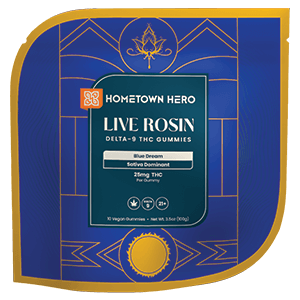
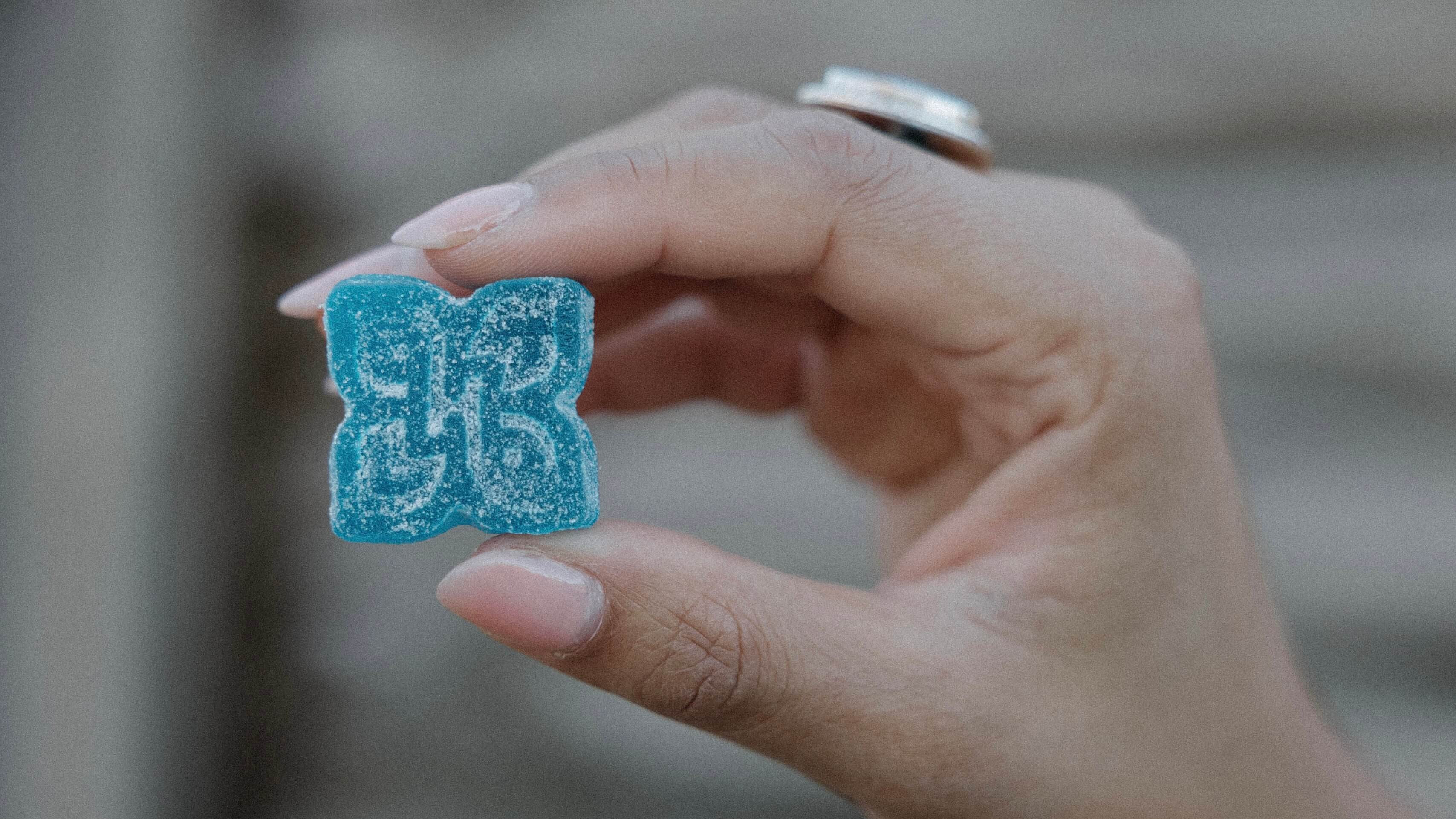
More recently, companies have found methods to extract muscimol and ibotenic acid from amanita mushrooms to create an extract. The extract can then be infused into a variety of form factors such as
gummies and chocolate. This has become a popular medium for ingesting as it allows for more control and safety around the experience.
Amanita Muscaria Habitat
Yes, we totally get where you’re coming from - it is tempting to go out in the woods and eat things that we aren’t familiar with like we’re Christopher McCandless in 2007’s dramatic hit Into the Wild (spoiler alert: he dies).
To be clear, it is not recommended that anyone attempts to find, process, and consume their own amanita without thorough research. That said, where would one find Amanita in the wild?
These fungi can be found across the globe in many different locales. Mushroom guides describe it as native to coniferous and deciduous woodlands, thriving in temperate and boreal regions of the Northern Hemisphere.
Interestingly, this mushroom also adapts to higher elevations of warmer latitudes, making appearances in regions like the Hindu Kush, the Mediterranean, and even parts of Central America. This cosmopolitan nature allows Amanita Muscaria to establish its presence in diverse geographical locations.
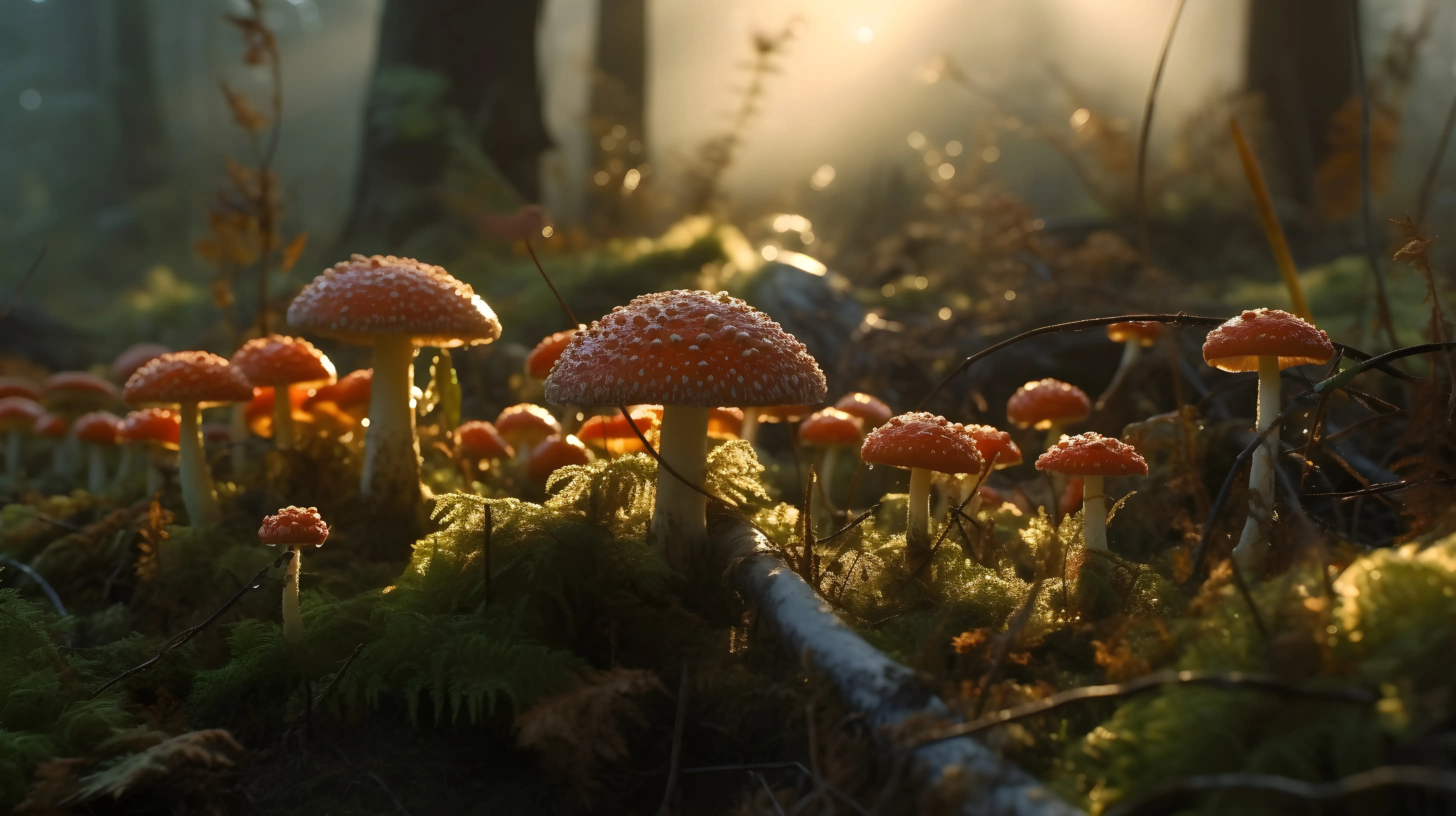
The most common place to find amanita is in “leaf litter” - or decomposing leaves that bleed nutrients into the forest floor. From here, young fruit bodies of the Fly Agaric mushroom emerge likely covered in pointed white warts.
As the caps grow larger, the underlying red skin becomes visible and the cap transforms into a predominantly red appearance with white warts spread evenly across its surface. Occasionally, heavy rain or contact with animals can cause the white flakes to be partially or completely removed from the cap, resulting in some specimens appearing "bald."
Legal Status and Regulations
Amanita muscaria is considered legal in the United States except in Louisiana. Besides using it for ornamental purposes, amanita cannot be grown or possessed in the state.
Final Thoughts
When using this mushroom, it is important to exercise caution and be mindful of its potential to alter the mind. The compounds found within, such as muscimol, can have a significant impact on one's perception and consciousness. The rich cultural history and importance surrounding this mushroom only add to its allure. While experiences with Amanita muscaria may differ, those curious about exploring the world of psychedelics should consider adding it to their list.
FDA Disclaimer: The statements made regarding these products have not been evaluated by the Food and Drug Administration. The efficacy of these products has not been confirmed by FDA-approved research. These products are not intended to diagnose, treat, cure, or prevent any disease. All information presented here is not meant as a substitute for or alternative to information from health care practitioners. Please consult your healthcare professional about potential interactions or other possible complications before using any product. The Federal Food, Drug, and Cosmetic Act requires this notice.


.D03bkZte.png?w=50&h=55&q=100)


 sativa
 indica