Technically speaking, CB1 receptors are proteins that live on the surface of cells, particularly those in the brain and central nervous system.
In the brain, CB1 is
expressed in areas like the cortex, hippocampus, amygdala, basal ganglia, cerebellum, and hypothalamus, which are responsible for
thinking, memory, emotion, pain processing, and homeostatic functions.
When activated by either endogenous or phytocannabinoids, these receptors then influence cell activity, turning their corresponding activity “on” or “off.” This activation or deactivation is how cannabinoids affect mood, memory, appetite, and the perception of pain, not to mention the classic euphoria from cannabis.
Let's look at two interesting examples. In our brains,
CB1 receptors are
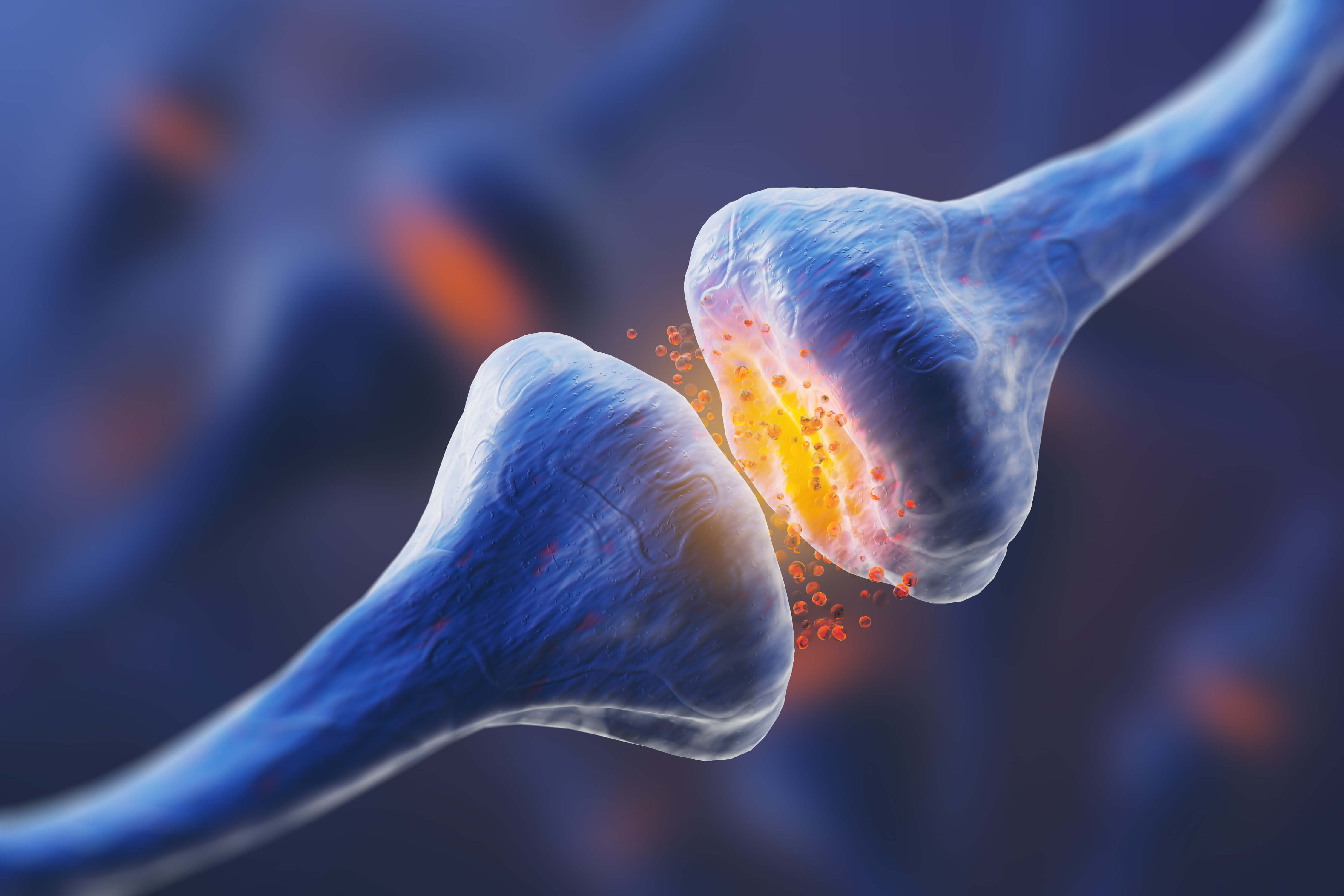
mostly located at the ends of neurons that release glutamate and GABA. When CB1 is activated, it typically reduces the release of these neurotransmitters, fine-tuning learning and memory formation.
Tetrahydrocannabinol (THC) is another. Called a partial agonist, THC enters the bloodstream, travels to CB1 sites, and then, like a key fitting into a lock, activates this receptor to produce its well-known psychoactive effects. Thanks to their similar structure, THC closely mirrors the work of anandamide, an endocannabinoid known for its blissful effects.
What Are CB2 Receptors?
The next piece to add to our ECS puzzle is CB2 receptors.
Much like CB1 receptors,
CB2 receptors are expressed on cells but are
concentrated across the immune system, major organs, the gut, and other peripheral tissues. They receive various cannabinoid signals to regulate inflammation, pain, and immune responses.
CB2
regulates how immune cells behave, including where and when they move and what cytokines they release. In doing so, it can either
increase or decrease inflammation, depending on the context.
CB2 receptors are also key players in the
body’s pain response, as
activation of them can reduce neuroinflammation and modulate the intensity of
pain signals at the site of injury. CB2 receptors in the spinal cord are particularly beneficial in this regard.
If THC binds strongly to CB1 receptors to produce those buzzy, psychoactive effects in the brain, what's happening at CB2 receptors?
THC has a strong affinity for CB1 but also binds to CB2, albeit to a lesser extent. And because CB2 receptors are primarily found outside the brain (in the immune system and other tissues), the
effects from activation tend to be
more body-focused than mind-altering.
For example, you may feel some full-body relaxation after a THC gummy, but the psychoactive effects mediated by its CB1 interaction are more perceptible.
Other cannabinoids are more partial to this receptor. For example, both
cannabinol (CBN) and cannabichromene (CBC) indirectly affect CB2 receptors. Researchers have discovered that they act as both agonists and partial agonists, meaning they may trigger either a full or partial response from the receptor. This explains the anti-inflammatory properties of these compounds, as well-documented in various scientific studies.
CB1 vs. CB2: Comparing Receptors
| Receptor | Where It’s Found | What It Regulates |
| CB1 | Regions of the brain, the central nervous system, organs, and some peripheral tissues | Mood, memory, appetite, reward, sensory processing |
| CB2 | Immune cells, gut, skin, and inflammatory pathways | Inflammation response, pain modulation, and immune balance |
How Different Cannabinoids Interact with CB1 and CB2
Some cannabinoids produce powerful psychoactive effects, while others are decidedly less heady. For example, THC “feels” more potent than CBD, leading to a euphoric mood and that telltale "high" versus the subtle, body-centered relaxation CBD provides.
Why? It's all about how each cannabinoid binds (or doesn’t bind) to our receptors, and what type of response that relationship prompts.
Think about it like different types of social relationships. You have an affinity for your best friend, and when you see that person, you are bound to get excited. In the simplest terms, this is a good way to understand an interaction between cannabinoids and receptors.
Scientifically, there are several types of interactions cannabinoids create:
- Full agonist: Activates a receptor strongly, producing a maximal response
- Partial agonist: Activates the receptor, but only produces a weaker, capped response, even if more is added
- Antagonist: Blocks the receptor, preventing it from being activated
For more context about how different cannabinoids interact with our cannabinoid receptors to produce various effects, let's break down these relationships by compound.
THC
- Affinity: High affinity for CB1; moderate affinity for CB2
- Action: Partial agonist at both CB1 and CB2
- Possible Effects: A euphoric "head high" that may come with enhanced sensory perception and relaxation. It may also support appetite, help ease discomfort, or settle an uneasy stomach. At higher serving sizes, some people feel sleepy or experience heightened sensitivity.
THCv
- Affinity: High CB1 and CB2 affinity
- Action: Antagonist or partial agonist at CB1 (dose-dependent) and partial agonist at CB2
- Possible Effects: At lower amounts, may counteract some of THC’s effects by blocking CB1, which is why it’s often associated with appetite suppression and a clearer experience. At higher servings, it can act more like a partial agonist, producing a mild, short-lived psychoactive effect of its own, often described as stimulating rather than sedating.
CBN
- Affinity: CB1 and CB2 affinity, but lower than THC
- Action: Weak/partial agonist at CB1 and CB2
- Possible Effects: Calming and relaxing with effects that can feel body-heavy with little to no head high. Some people describe it as gently soothing, best for end-of-day wind-downs.
CBD
- Affinity: Very low CB1 and CB2 affinity
- Action: Antagonist at CB1and CB2 (also acts at many non‑cannabinoid areas)
- Possible Effects: Calming effect with the potential to ease everyday stress and support overall wellness. It's studied for its potential to reduce inflammation while supporting mood and neurological function. As a bonus, when paired with THC, CBD can help mellow out some of the stronger effects for a smoother experience.
CBG
- Affinity: Low CB1 and CB2 affinity
- Action: Antagonist at CB1 and partial agonist at CB2
- Possible Effects: Often described as clear-headed, CBG may support relaxation without the cerebral buzz. It's studied for its potential as an anti-inflammatory, pain reliever, and more.
CB1 vs. CB2: Why It Matters to You





.D03bkZte.png?w=50&h=55&q=100)





 sativa
 indica